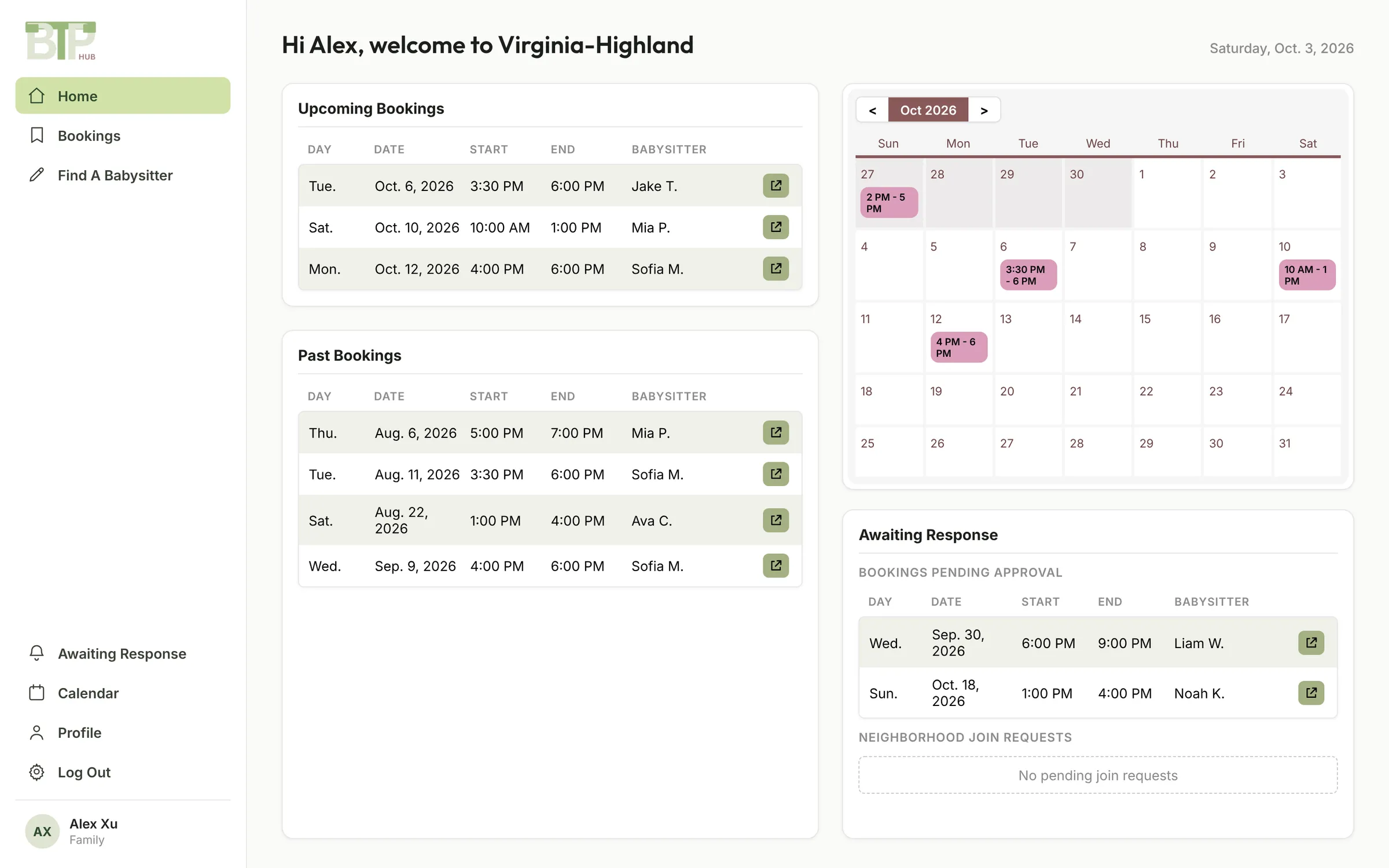
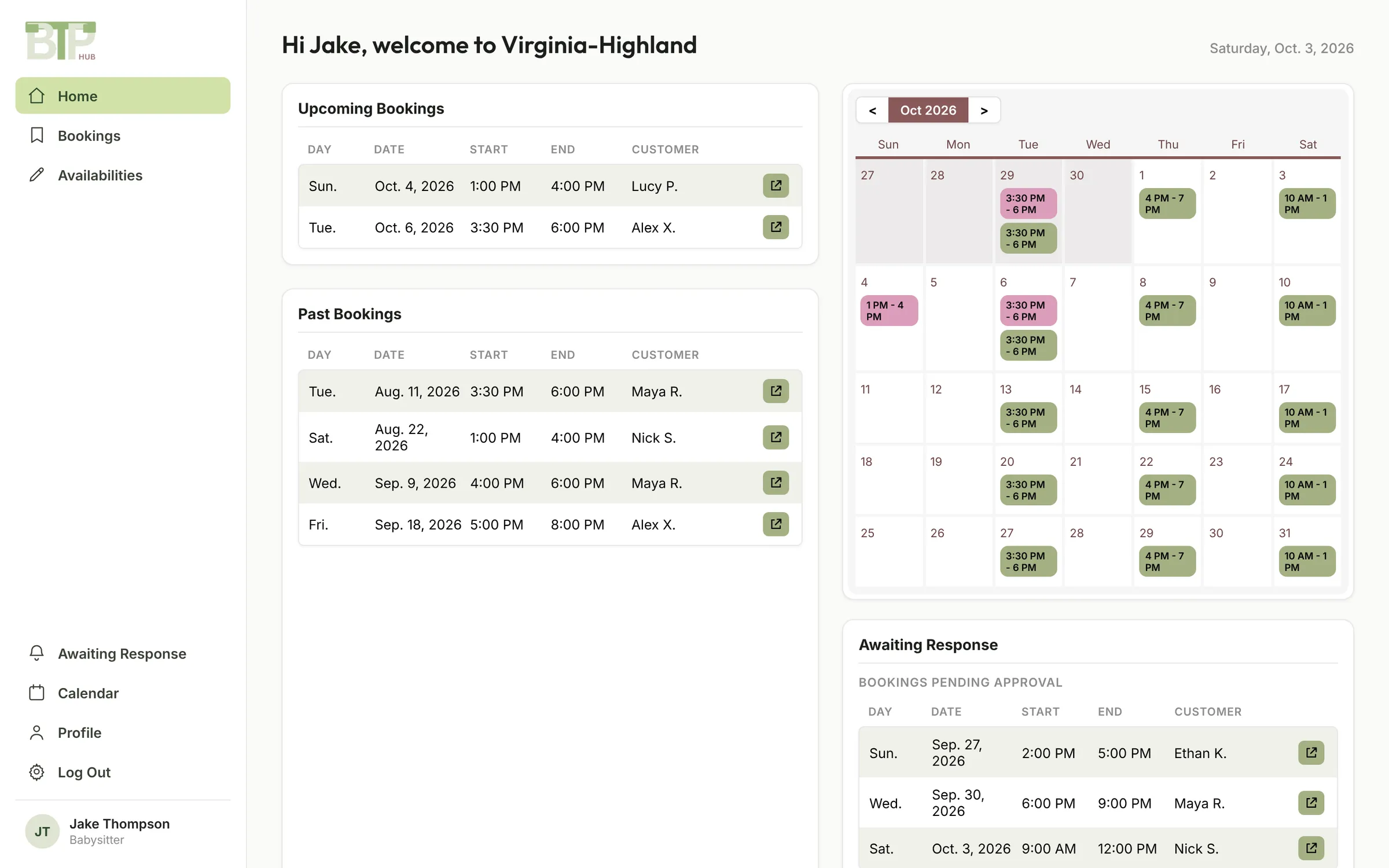
← Index fig. 1
BTPHub
a marketplace connecting families with tutors and sitters across 80+ neighborhoods
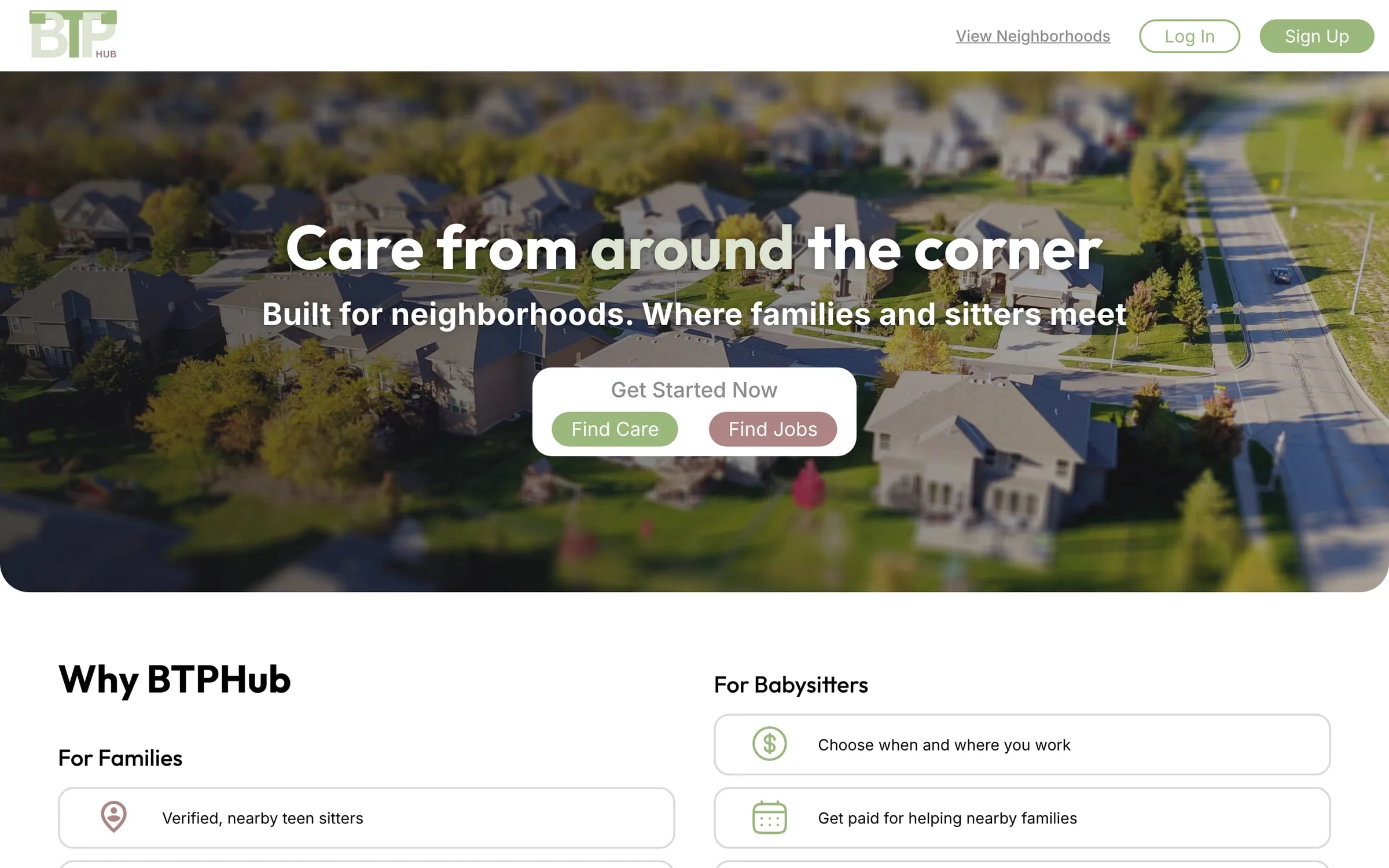
Most babysitting apps are built for strangers. You search a city, scroll through people you’ll never run into, and hope the reviews are real. BTPHub goes the other way: you join your neighborhood, and the sitters and tutors you see live down the street.
TLDR: a two-sided marketplace (families on one side, sitters and tutors on the other) scoped to neighborhoods. Vue front end, ASP.NET API, Azure SQL, deployed through Azure Pipelines. It has location-based search, profiles, recurring availability, booking requests with accept/deny, and email notifications. It’s grown to 80+ neighborhoods, 2,000+ service connections and 700+ repeat users.
Design first
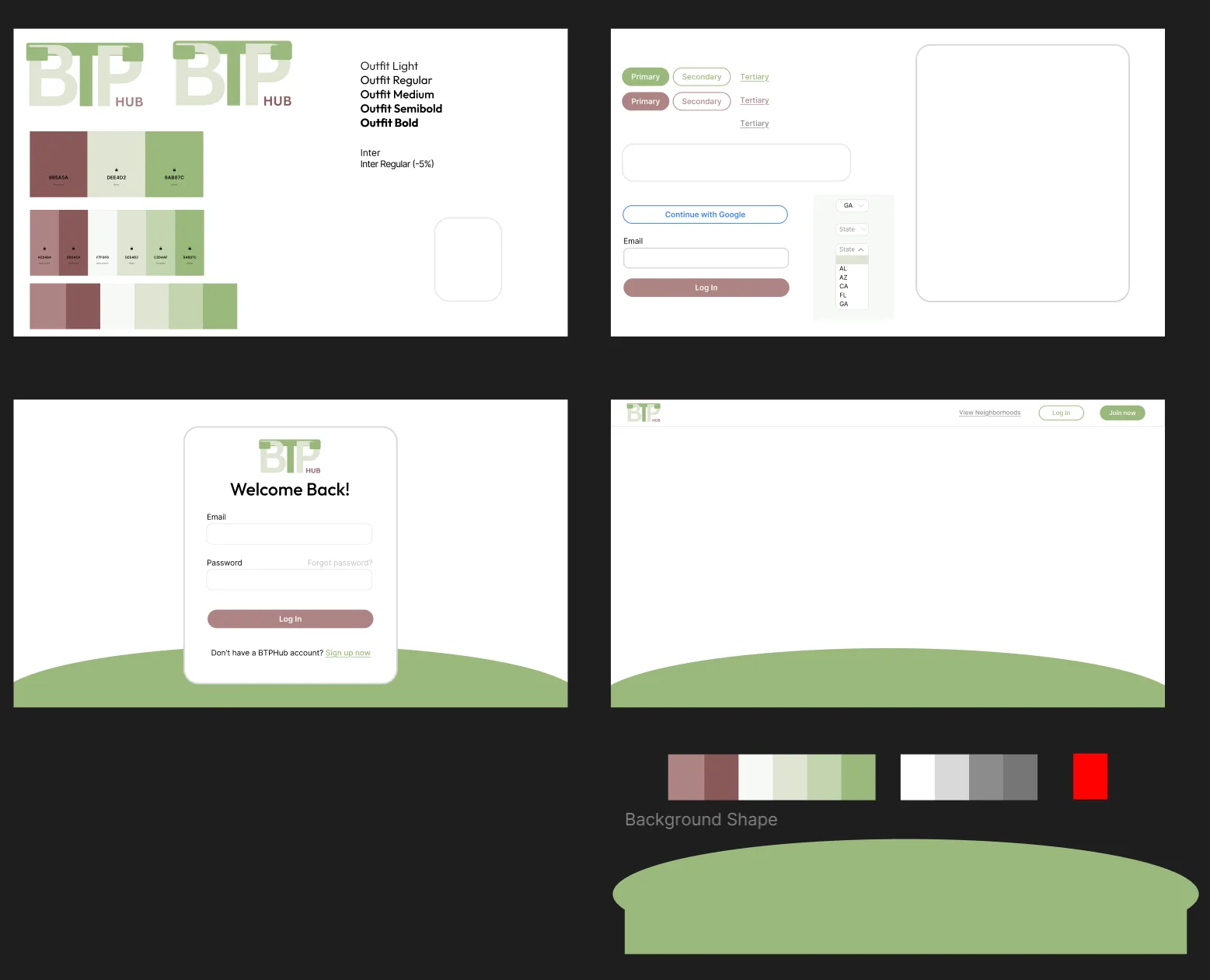
Before any code, I laid the app out in Figma: logo, a green palette, Outfit for headings and Inter for text, and the core components.
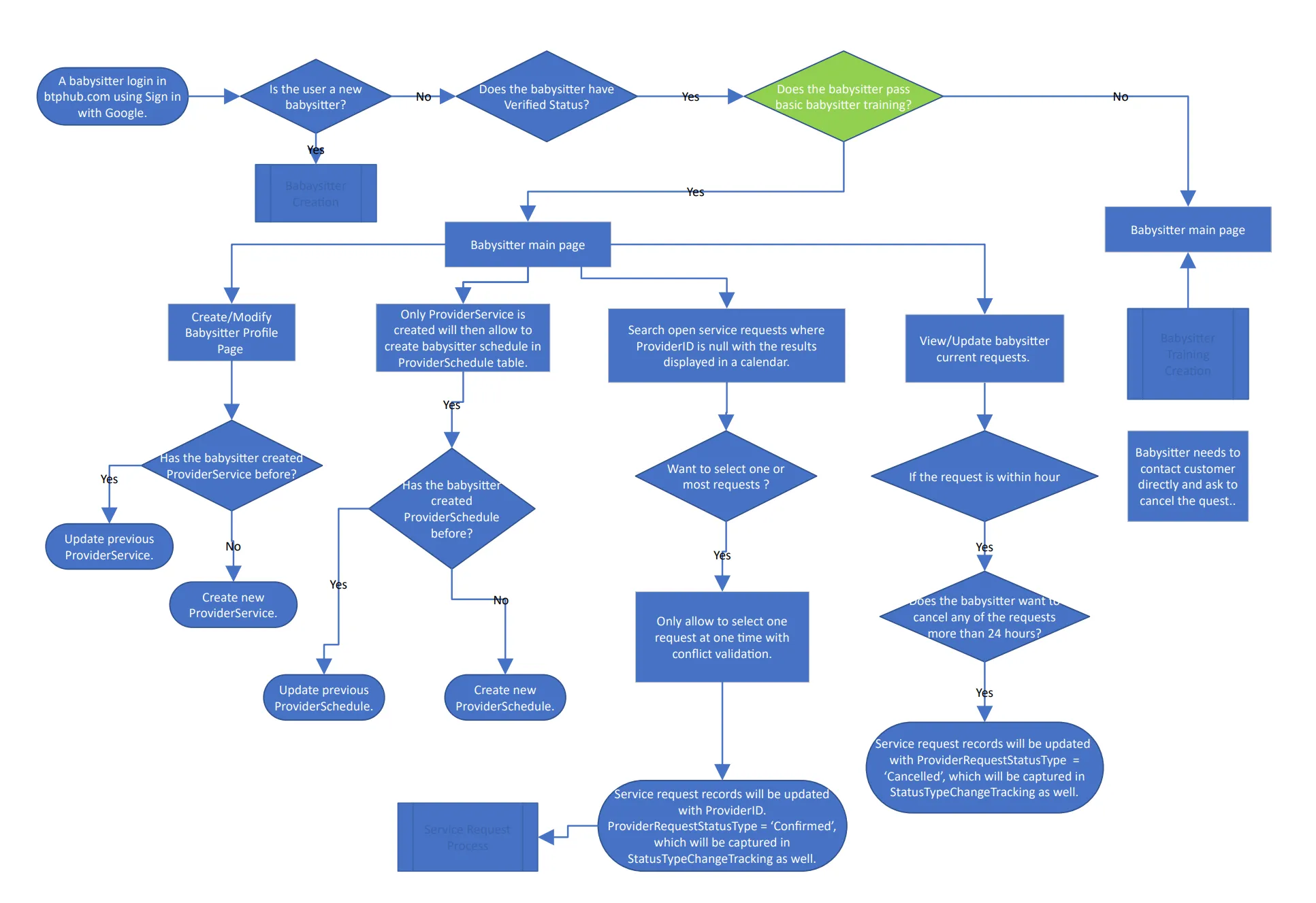
The logic took more thought. A booking touches two people with two calendars, and either of them can back out. I drew the whole babysitter flow as a chart before writing the API.
Neighborhoods
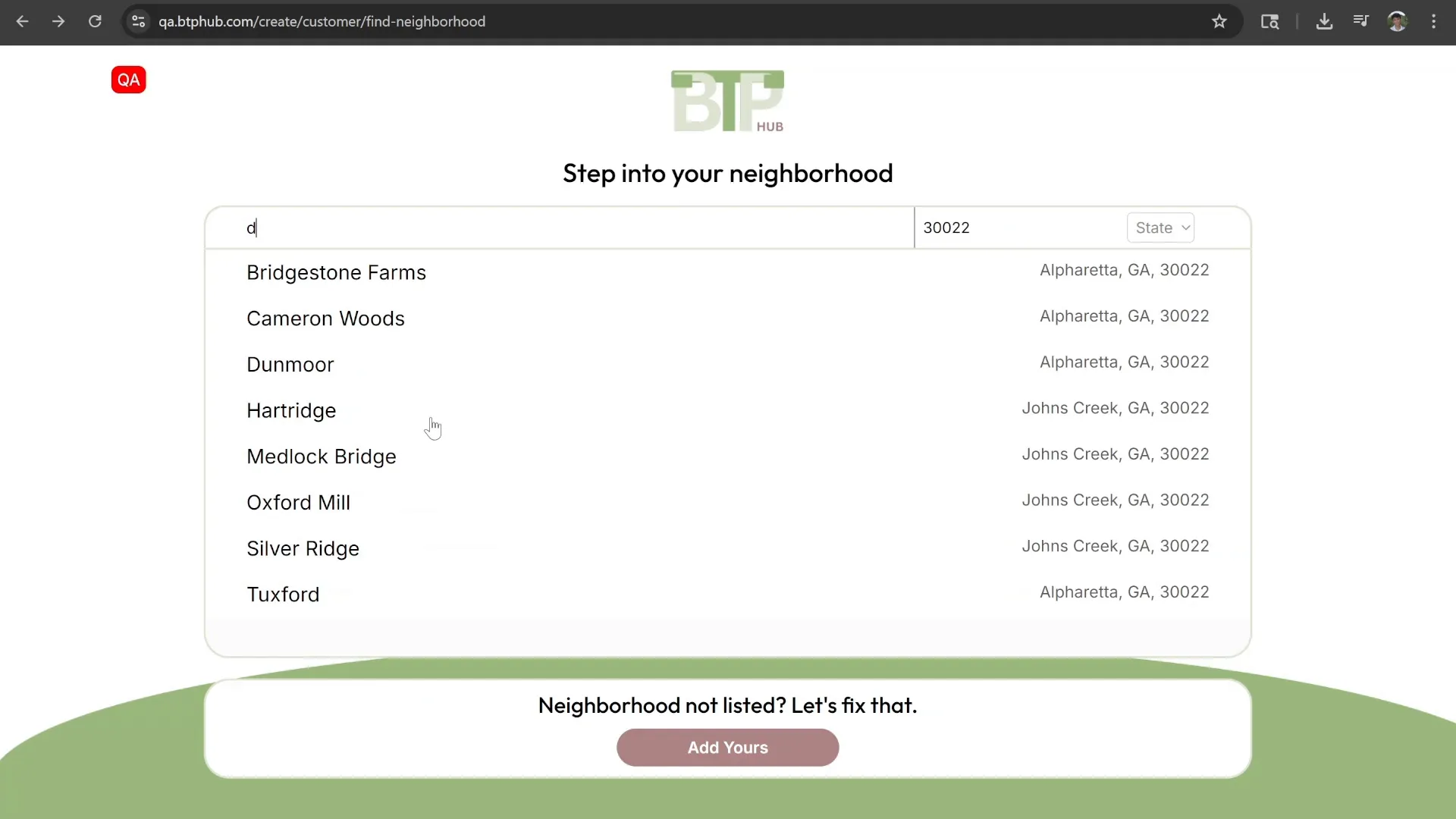
Sign-up asks one question first: are you looking for care, or looking for jobs? Then you find your neighborhood by name or ZIP. If it isn’t there, you can request it.
Booking
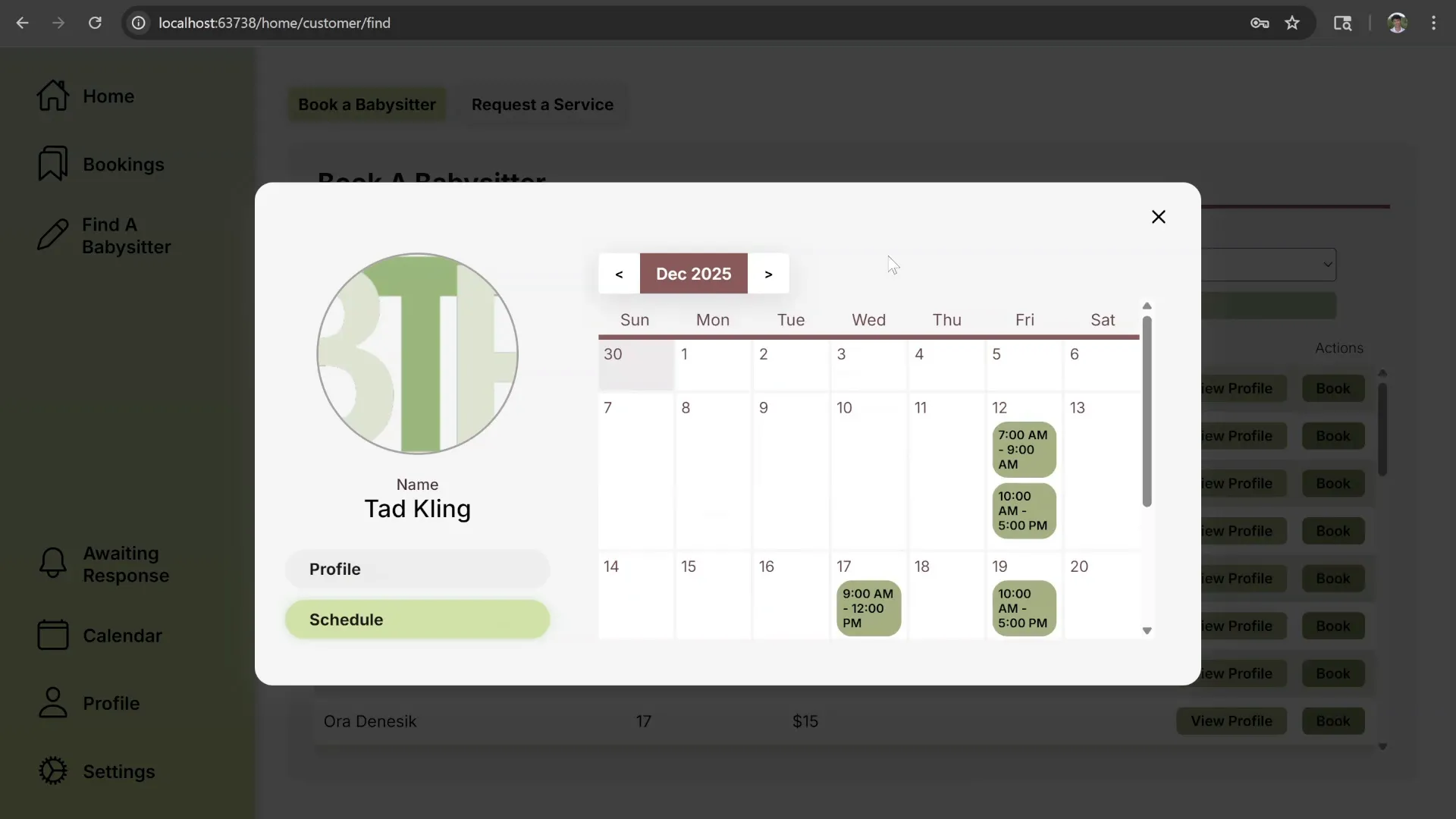
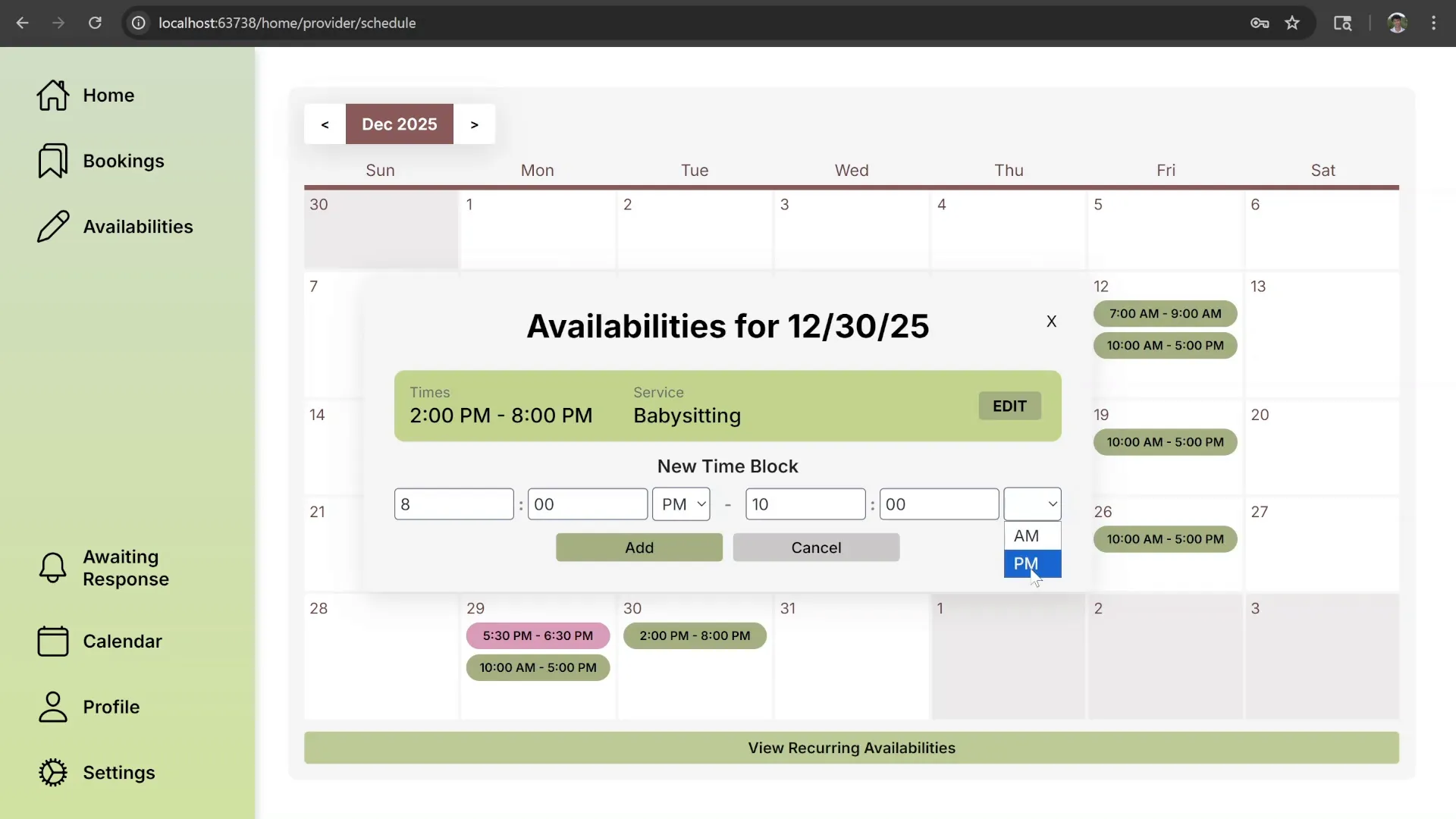
Families filter sitters by date and time, open a profile, check the sitter’s schedule, and send a request. Sitters set recurring availability (“weekdays 3–6 pm”) plus one-off blocks, and accept or deny what comes in.
The backend
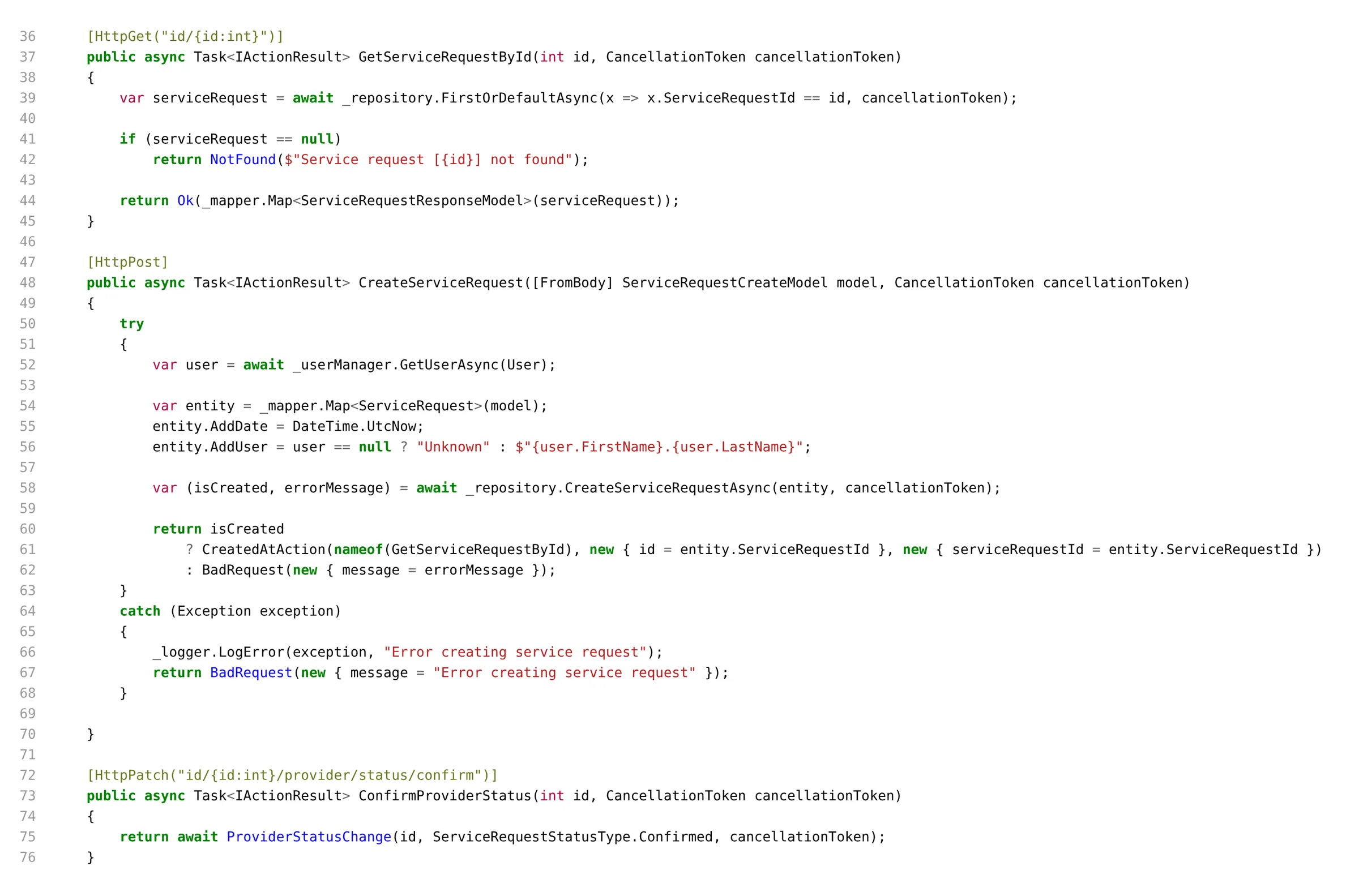
The API is ASP.NET with Azure SQL behind it. By the end there were 27 entity classes and 85 routes across 17 controllers, a lot of them inherited from generic base controllers so that adding a new resource didn’t mean writing the same five endpoints again.
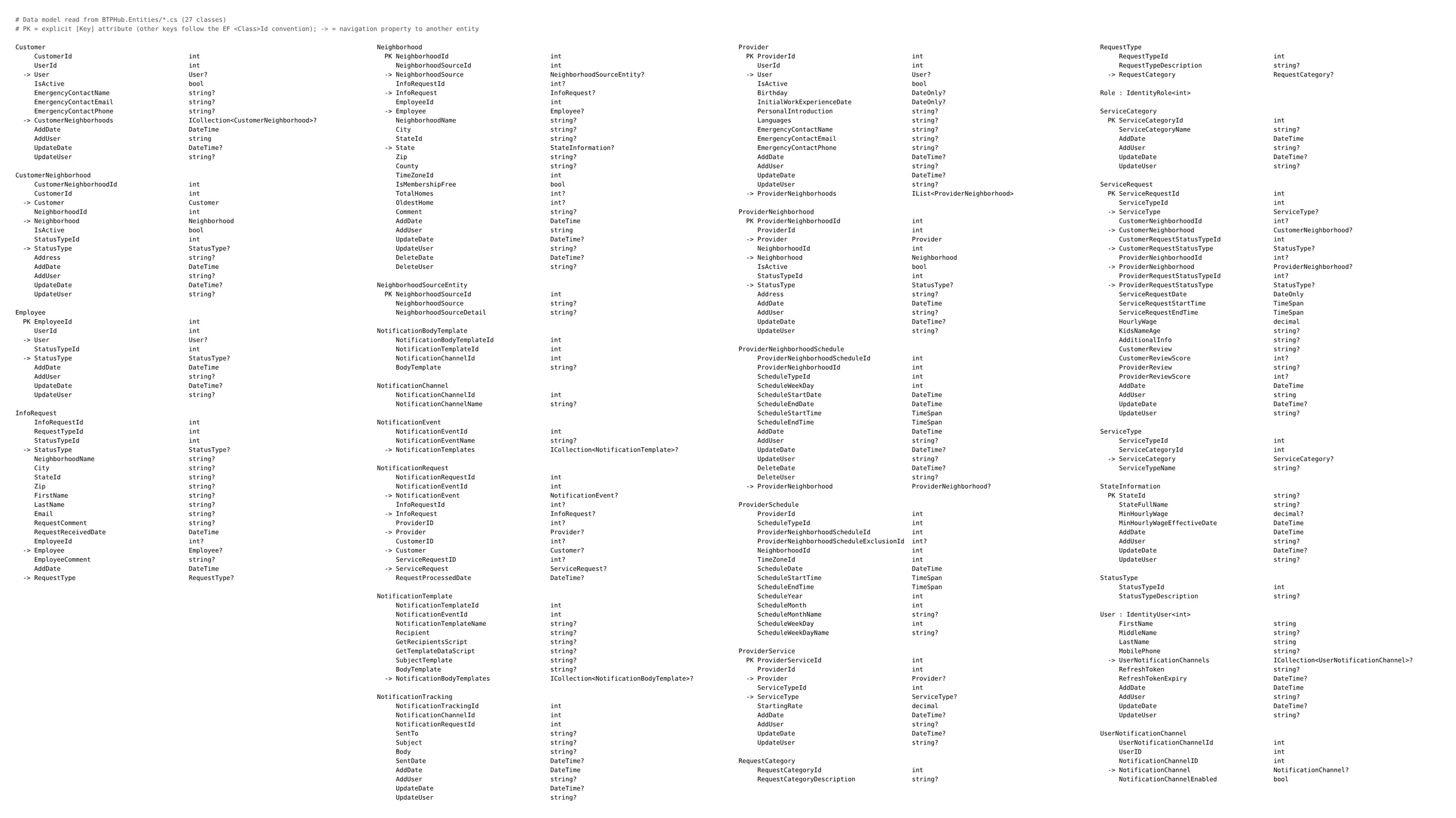
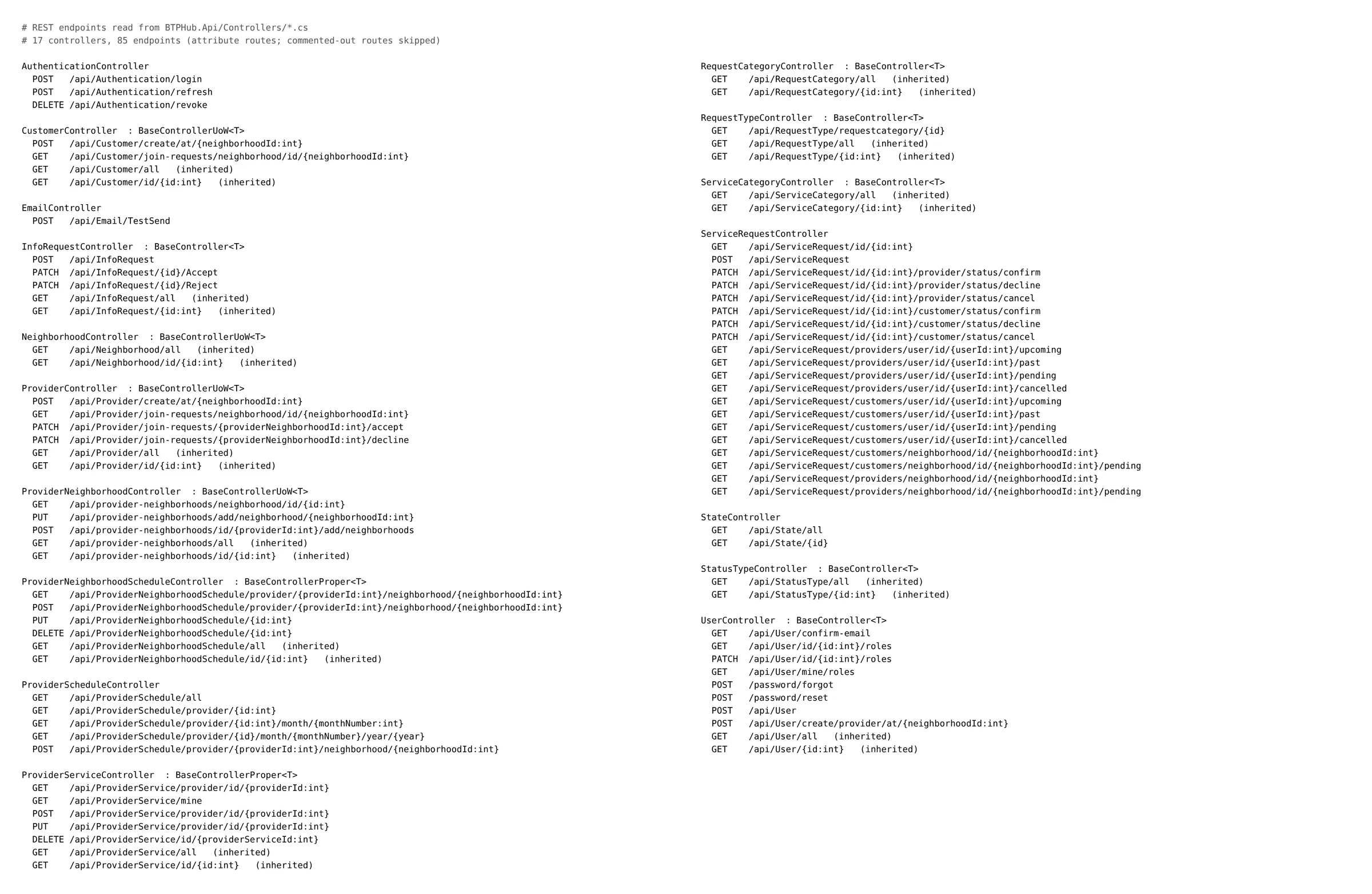
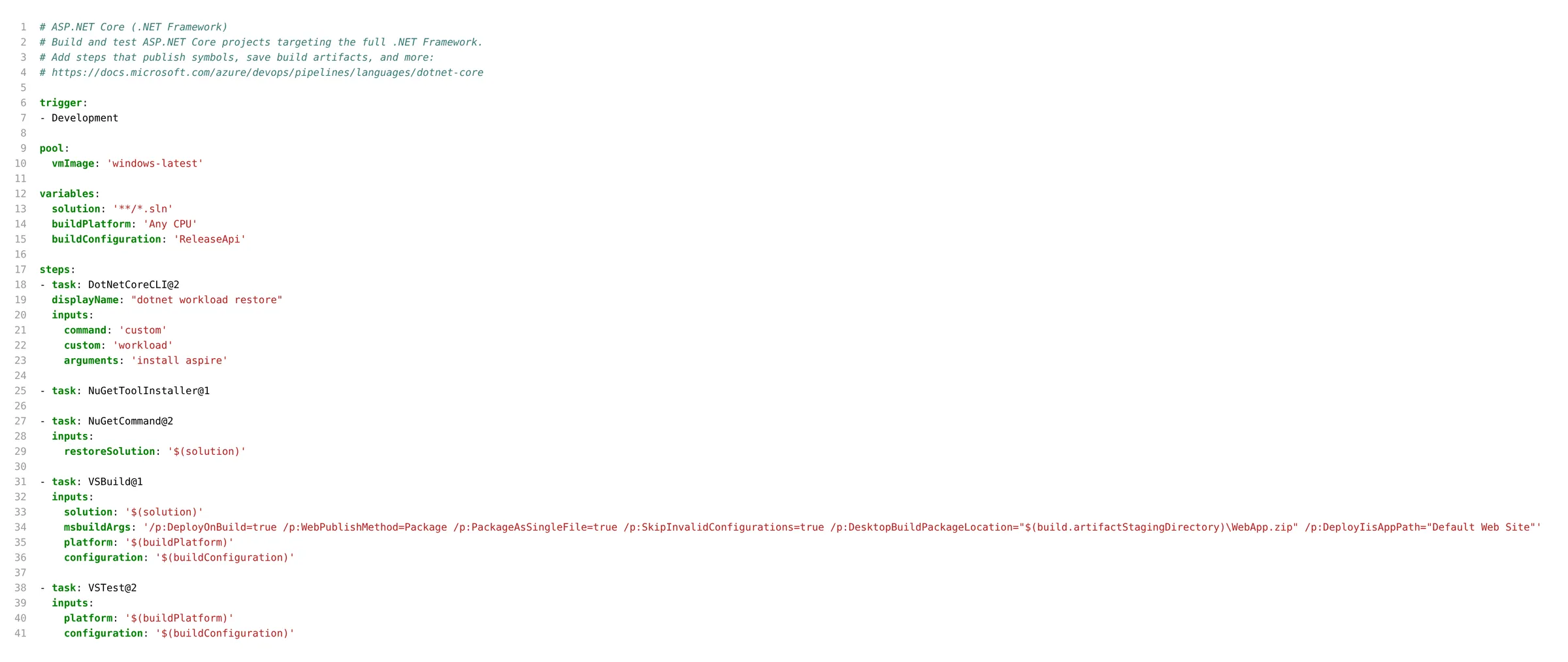
Notifications are their own project: templates filled in with the booking details and sent by email. Builds and deploys to the QA site run through Azure Pipelines.
The rewrite
In September 2026 I rebuilt the whole thing in Next.js. I started by recreating every page of the Vue app as a reference board, then rebuilt against those boards so nothing got lost. The flows are the same, and the code now lives in one app instead of three projects.